English 3
The key question for English 3 is, “What are we pursuing?” Questions that go along with that include, “How can literature help us to make sense of human motivation?” “How can a writer make use of various media in order to pursue human-to-human connections with others?” “What am I pursuing?”
The vision for this course is to ask these questions through a variety of types of literature. Classics and canonical American texts are used, as well as literature from a variety of different voices, including women, minorities, and the founders of the Constitution. Each of the texts that was chosen wrestles with the realities of human pursuit in some way. The hope is that students will have an opportunity to consider important questions about their own life pursuits through the examination of this literature, with the goal of moving them toward pursuits that will lead to fulfilling and meaningful lives.
An interrelated theme that is explored throughout the course is that of “encounters” or “connections.” The course aims to teach writing techniques that will enable students to create meaningful encounters for their audiences. Students are encouraged to look for meaningful connections with the authors and texts that they explore. One vital human pursuit is encounter or connection, and literature is explored in a way that fosters this meaningful pursuit.
An Honors version of the course is also available, offering greater volume and rigor than the standard course. Each unit includes at least one Honors extension, which may involve an additional lesson and assignment, or an expanded version of a standard assignment. The Honors course also includes a short independent novel study that is not part of the standard course.
Table of Contents
*Each lesson is designed to take 60 minutes to complete with the exception of major projects and assignments.
- Course Introduction
- Course Thematic Introduction
- Writing in Pursuit of Connection
- Descriptive Writing
- Storytelling Through Dialogue
- Lesson Assignment: Writing as a Meeting Place Activities I
- Exploding a Moment
- Capturing Emotion
- The Narrative Hook
- Honors Assignment: Analyzing Narrative Hooks
- Lesson Assignment: Writing as a Meeting Place Activities II
- Making Memories
- Writing a Memoir
- Revising Your Memoir
- Unit Assignment: Memoir Assignment
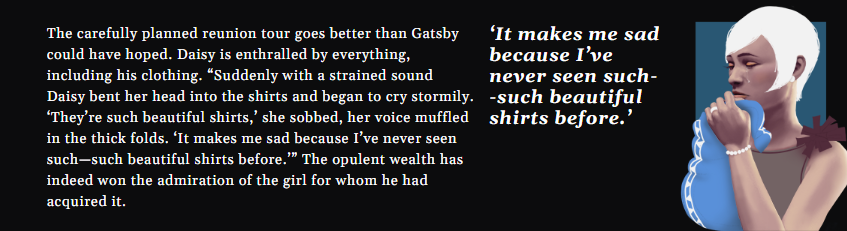
- Introduction to The Great Gatsby
- The Great Gatsby, Chapters 1–2
- The Great Gatsby, Chapters 3–4
- The Great Gatsby, Chapters 5–6
- The Great Gatsby, Chapter 7
- The Great Gatsby, Chapters 8–9
- Honors Assignment: Song Analysis Assignment
- Lesson Assignment: Making Predictions Reflection Questions
- The Lost Generation
- Joining the Conversation
- Lesson Assignment: Gatsby Reflection Activities
- Gatsby Project, Stage 1
- Gatsby Project, Stage 2
- Unit Assignment: Gatsby Project
- Poetry Part 1: Pursuing Love
- Poetry Part 2: Pursuing Meaning in Grief
- Poetry Part 3: Pursuing Tranquility in Nature
- Lesson Assignment: Poetry Response Activities
- Short Stories Part 1: Pursuing a Just Society
- Short Stories Part 2: Pursuing Tradition
- Lesson Assignment: Short Story Response Activities
- Creative Nonfiction: Pursuing a Home
- Founding Documents: Pursuing Liberty
- Literary Nonfiction: Pursuing Equality
- Commencement Speeches: Pursuing Hope and a Future
- Genre Assignment
- Unit Assignment: Genre Assignment
- Honors Assignment: Literary Collection Assignment
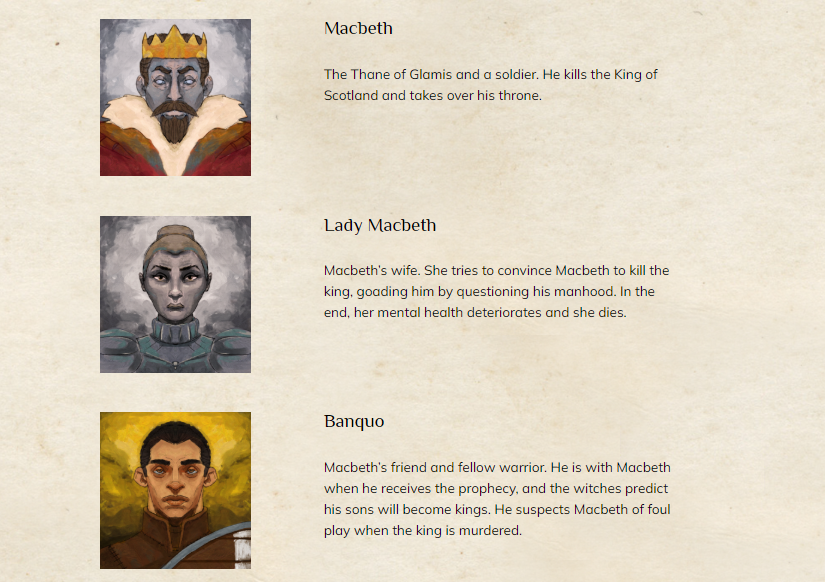
- Introduction to Macbeth or Introduction to Death of a Salesman
- Macbeth, Act 1 or Death of a Salesman, Act 1, Part 1
- Macbeth, Act 2 or Death of a Salesman, Act 1, Part 2
- Macbeth, Act 3 or Death of a Salesman, Act 1, Part 3
- Macbeth, Act 4 or Death of a Salesman, Act 2, Part 1
- Macbeth, Act 5 or Death of a Salesman, Act 2, Part 2
- Viewing Macbeth or Death of a Salesman, Act 2, Part 3
- Lesson Assignment: Production Review
- Analyzing Macbeth’s Themes or Death of a Salesman Requiem
- Macbeth Performance or Analyzing Death of a Salesman’s Themes
- Viewing Death of a Salesman (Death of a Salesman only)
- Death of a Salesman Performance (Death of a Salesman only)
- Unit Assignment: Performance Assignment
- Advertisements: Pursuing Fulfillment
- Honors Assignment: Create a Persuasive Advertisement
- News and Information Sources Part 1
- News and Information Sources Part 2
- Visual and Data Literacy
- Digital Responsibility
- Lesson Assignment: Multimedia Activities
- Research Workshop Part 1
- Research Workshop Part 2
- Lesson Assignment: Research Checkpoint Activities
- Research Project
- Unit Assignment: Multimodal Research Project
- Intro to the Novel Study and Book Choices
- Reading With Purpose
- Context and Conflict
- Character
- Themes
- Personal Response
- Writing a Book Report
- Unit Assignment: Book Report
- Final Project Introduction
- Creating Your Final Project
- Cumulative Assignment: Final Project
Experience a lesson as your students would
Course Features
- “60-second Seminars” – short, humorous instructional videos
- Many videos come with note packages so students can fill in the blanks as they watch
- In skill-heavy units, the videos are interactive, stopping at various points for students to practice what they have just learned
- Grammar games
- Spaceblaster
- Puncturation
- Word Bounce
- Other interactives – effort has been made to ensure that there is at least one per unit in some of the challenge areas so students give extra time and attention to key skills like summarizing text, parts of a letter, building a works cited entry, understanding literary devices, parts of an argument, etc.
- Flexibility – Wherever possible/reasonable, summative assessments offer maximum student choice and flexibility so that the course can feel very personalized, enhancing engagement
- Thoughtfully-chosen core texts: The Great Gatsby by F. Scott Fitzgerald and Shakespeare’s Macbeth are the two major texts studied, selected for their relevance to course themes